
About Hearing
Hearing Loss in Children
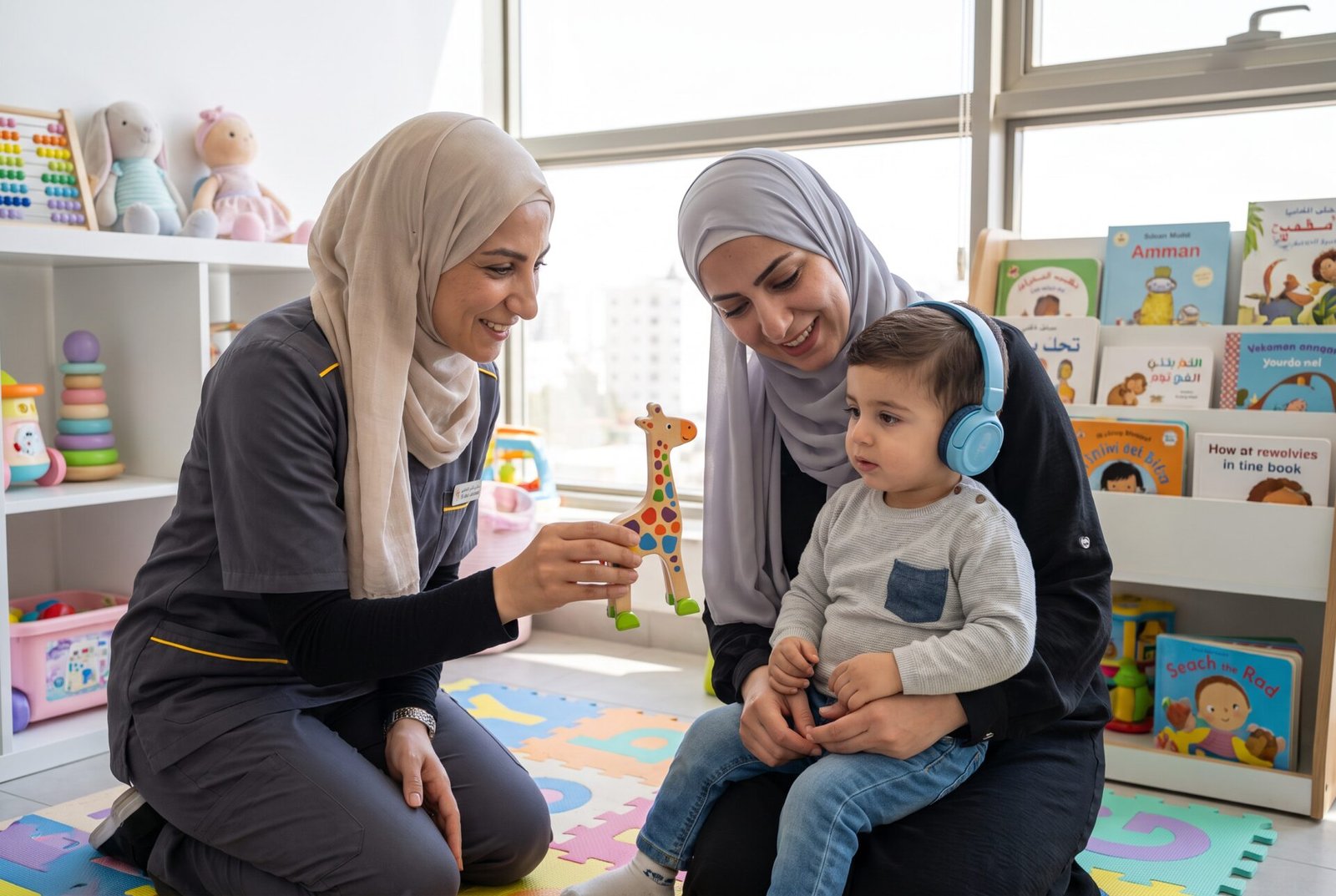
Why early detection matters
Children learn to talk by hearing the voices and sounds around them. The CDC explains that hearing loss can affect a child’s ability to develop communication, language and social skills.
The good news is that time is on your side when you act early. According to the CDC, the earlier children with hearing loss start getting services, the more likely they are to reach their full potential.
The 1-3-6 guideline
The CDC recommends three simple targets for every baby:
1
By 1 month
3
By 3 months
6
By 6 months
Hearing loss can also appear later in childhood. If you have any concern at any age, trust your instincts and ask for a hearing test.
Hearing and speech milestones by age
| Age | Hearing | Talking |
|---|---|---|
| Birth to 3 months | Alerts to sounds. Quiets or smiles when you talk. | Coos (“ooo”, “aah”). Makes sounds back and forth with you. |
| 4 to 6 months | Reacts to toys that make sounds, such as bells or music. | Giggles and laughs. Makes different vowel sounds, sometimes with a consonant (“daaa”). |
| 7 months to 1 year | Looks at you when you call their name. Responds to simple words, such as “bye-bye”. | Babbles strings of sounds (“bababa”, “mamama”). Says one or two words, such as “mama” or “dada”, by about 1 year. |
| 1 to 2 years | Follows simple directions, such as “Give me the ball”. By 2 years, follows two-step directions. | Uses words for common objects and people. By 2 years, puts two words together, such as “more water”. |
| 2 to 3 years | Answers simple questions, such as “What do you do when you are sleepy?” | Uses word combinations often. Asks “why” and “how”. |
| 3 to 4 years | Understands location words, such as “inside”, “on” and “under”. | Tells a story from a book or video. By 4 years, most of their speech is understood by others. |
| 4 to 5 years | Follows simple directions and rules to play games. | Speaks in longer, correct sentences. Speech is easy to understand in conversation. |
Adapted from the American Speech-Language-Hearing Association (ASHA), Developmental Milestones: Communication (birth to 5 years). ASHA uses some smaller age groups, which we have combined here. ASHA states that its milestones are not a screening or diagnostic tool. They are a guide to help you start a conversation with your child’s doctor.
Signs a parent might notice
In babies
- Does not startle at loud noises.
- Does not turn towards a sound after 6 months of age.
- Does not say single words, such as “mama” or “dada”, by 1 year of age.
- Turns their head when they see you, but not when you only call their name.
- Seems to hear some sounds but not others.
In children
- Speech is delayed.
- Speech is not clear.
- Does not follow directions. This is sometimes mistaken for not paying attention.
- Often says “Huh?” or “What?”
- Turns the TV or radio volume up too high.
See a doctor promptly if your child:
- Has fluid or discharge coming from the ear.
- Has ear pain with a fever, or tugs at the ear and is unusually upset.
- Has a sudden change in hearing or speech, or stops using words they used before.
- Has had meningitis or a serious head injury. The CDC lists both as risk factors for hearing loss, so ask for a hearing test.
Common causes
Hearing loss can happen at any time, from before birth onwards. Sometimes the cause is not known. The main causes named by the WHO, the CDC and MED-EL include:
- Genetic factors. The CDC states that about half of hearing loss in babies is due to genetic causes. Some children have family members with hearing loss.
- Infections during pregnancy, such as rubella and cytomegalovirus (CMV), according to the WHO.
- Problems around birth, such as a lack of oxygen at birth, severe jaundice or low birth weight (WHO). The CDC also lists a stay of 5 days or more in neonatal intensive care.
- Meningitis and other infections in childhood (WHO).
- Ear infections and fluid in the middle ear, especially when they are long-lasting (WHO).
- Differences in the shape of the ear, such as conditions present at birth that affect the outer or middle ear (MED-EL, CDC).
- Head injury (CDC) and loud noise (MED-EL).
Many cases can be prevented
The WHO states that in children, nearly 60% of hearing loss is due to avoidable causes that can be prevented through public health measures.
If your baby did not pass the newborn hearing screening
Step 1
Book a full hearing test soon
Step 2
Do not miss the appointment
Step 3
Know what to expect
Step 4
Involve your doctors
Step 5
If hearing loss is confirmed, start support early
Step 6
If no hearing loss is found
Harmony offers hearing tests for children and works closely with ENT surgeons. We will explain each result clearly and help you plan what comes next.
Treatment options

Listening and speech therapy
A hearing device is only the beginning. Children need to learn how to make sense of the sounds they now hear. MED-EL describes rehabilitation as the process of actively learning to hear, and says regular practice can lead to faster and better progress.
Therapy at Harmony
Our listening and speech therapy sessions help your child build listening skills, understand speech and develop spoken language. We also show you how to continue the work at home.
Practice at home
Daily listening practice at home makes a real difference. ASHA suggests simple habits:
- Talk to your child about what you are doing during the day.
- Read, sing and tell stories every day.
- Respond when your child makes sounds, and copy their sounds back.
- Use the languages you are most comfortable with at home.
Free resources from MED-EL
LittlEARS Auditory Questionnaire
A Child’s Journey
Auditory Skills Checklist
Rehabilitation downloads
Tips for school and home
- Choose the right seat. Ask for your child to sit near the teacher and away from noisy areas, such as doors, windows or fans.
- Reduce background noise. At home, turn off the TV or radio when you are talking or reading together.
- Face your child when you speak. Get their attention first, speak clearly, and pause so they can respond.
- Tell the teachers. Explain your child’s hearing needs and how their device works, and keep in regular contact.
- Ask about assistive technology. Remote microphones and streaming accessories can send the teacher’s voice directly to your child’s hearing device. The WHO lists these hearing assistive technologies as part of hearing care. Ask us which options work with your child’s device.
Questions parents ask
Yes. ASHA states that audiologists test children of all ages, even babies. The CDC explains that hearing tests are easy and not painful, and some can be done while the baby sleeps.
Yes. NIDCD notes that hearing loss can occur at any time of life. The CDC recommends that children at risk of later hearing loss have at least one hearing test by 2 to 2½ years of age. If you notice any warning signs, book a test.
It depends on the cause. Some hearing problems are temporary. For example, NIDCD notes that fluid left in the middle ear after an infection usually clears within three to six weeks. Other types of hearing loss are long-term, and some can get worse over time. Do not wait to see: only a hearing test can tell you what is happening.
As early as possible. The CDC’s 1-3-6 guideline aims for intervention by 6 months of age. MED-EL also notes that children who receive a cochlear implant at a young age are more likely to succeed, because the young brain is ready to learn language.
MED-EL describes cochlear implant surgery as safe and routine, taking about one to two hours, with a hospital stay of a day or two. Like any surgery, it has some risks. Your ENT surgeon will explain these and check whether an implant is right for your child.
Many can. NIDCD states that many children who receive cochlear implants succeed in mainstream classrooms. With the right device, therapy and support from teachers, children with hearing loss can learn alongside their classmates.
Sources: CDC · CDC screening (1-3-6) · ASHA milestones · NIDCD · WHO · MED-EL
This page is for general information only and is not medical advice. Please see an ENT doctor and have your child’s hearing tested for advice about your child.