About Hearing

How does hearing work?

Hearing is a remarkable process. Your ears and your brain work together, in a fraction of a second, so that you can hear the world around you.
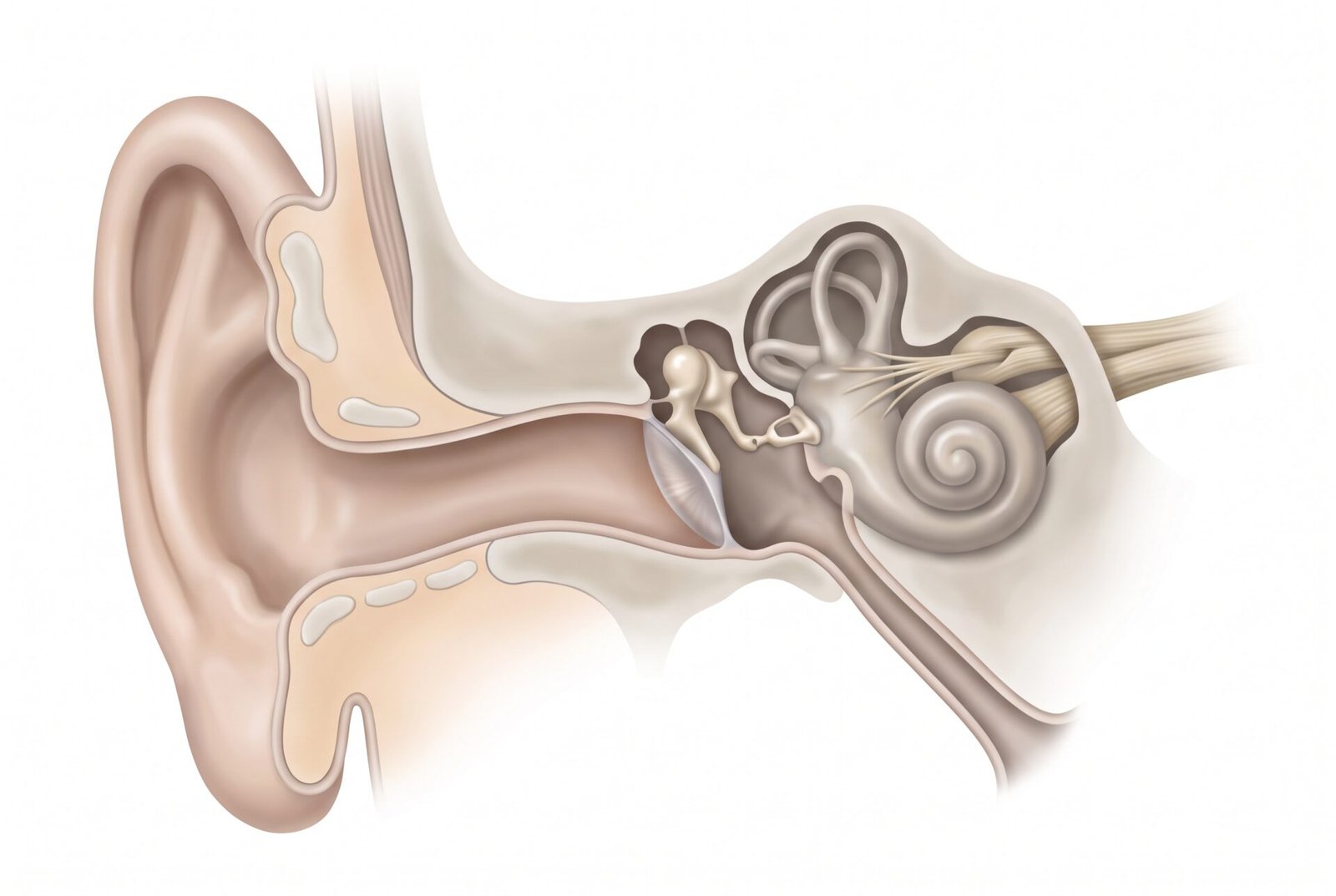
Ear anatomy illustration

How we hear, step by step

Everything we hear starts as a sound wave. Each part of the ear has its own job in turning that wave into a signal the brain can understand.
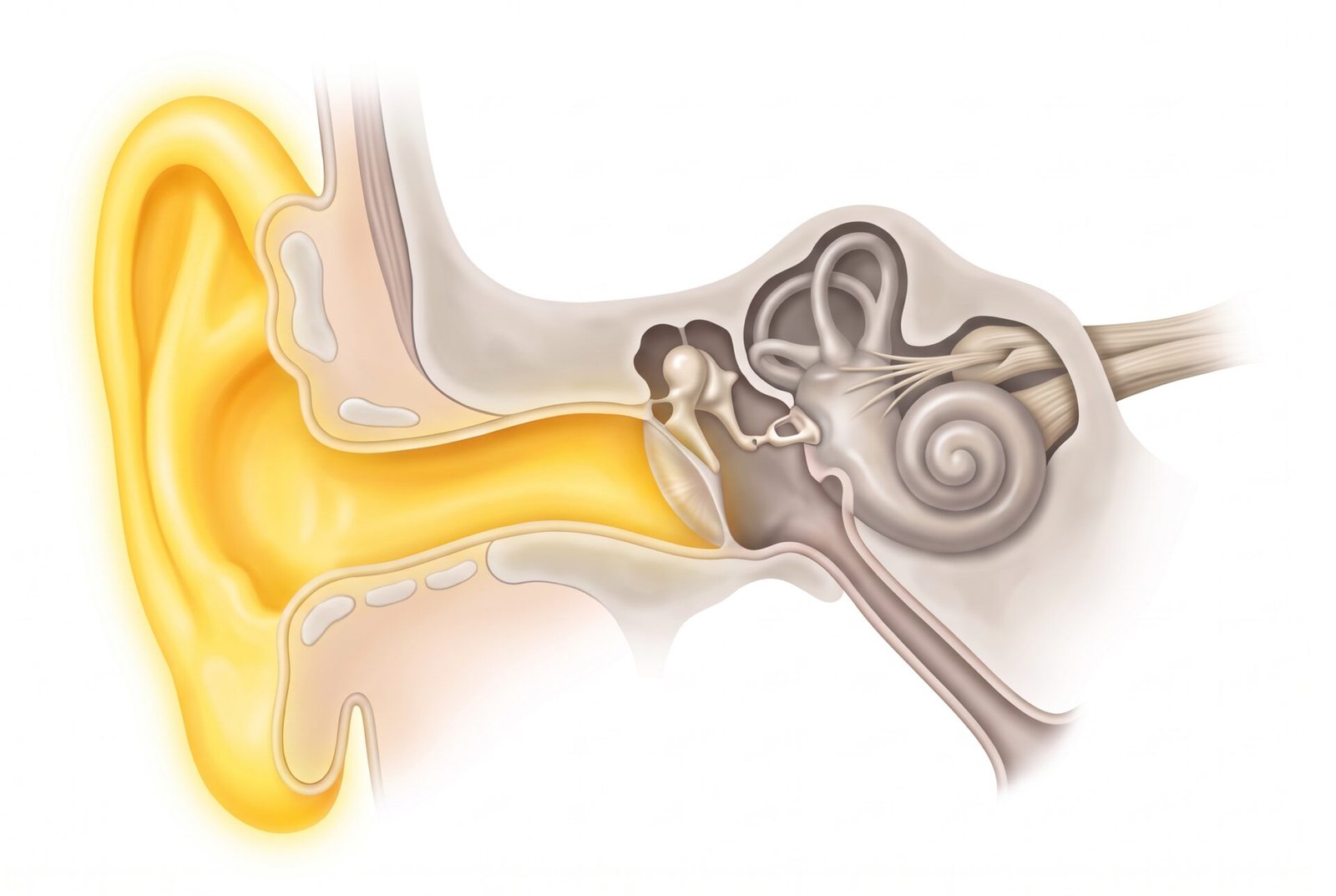
Outer ear highlighted

Step 1

The outer ear

Sound waves are vibrations in the air. The outer ear, the part you can see, collects them and channels them down the ear canal to the eardrum, which starts to vibrate.
When something goes wrong here
Ear wax, an infection or a narrow or closed ear canal can stop sound before it reaches the eardrum. This causes conductive hearing loss.

Step 2

The middle ear

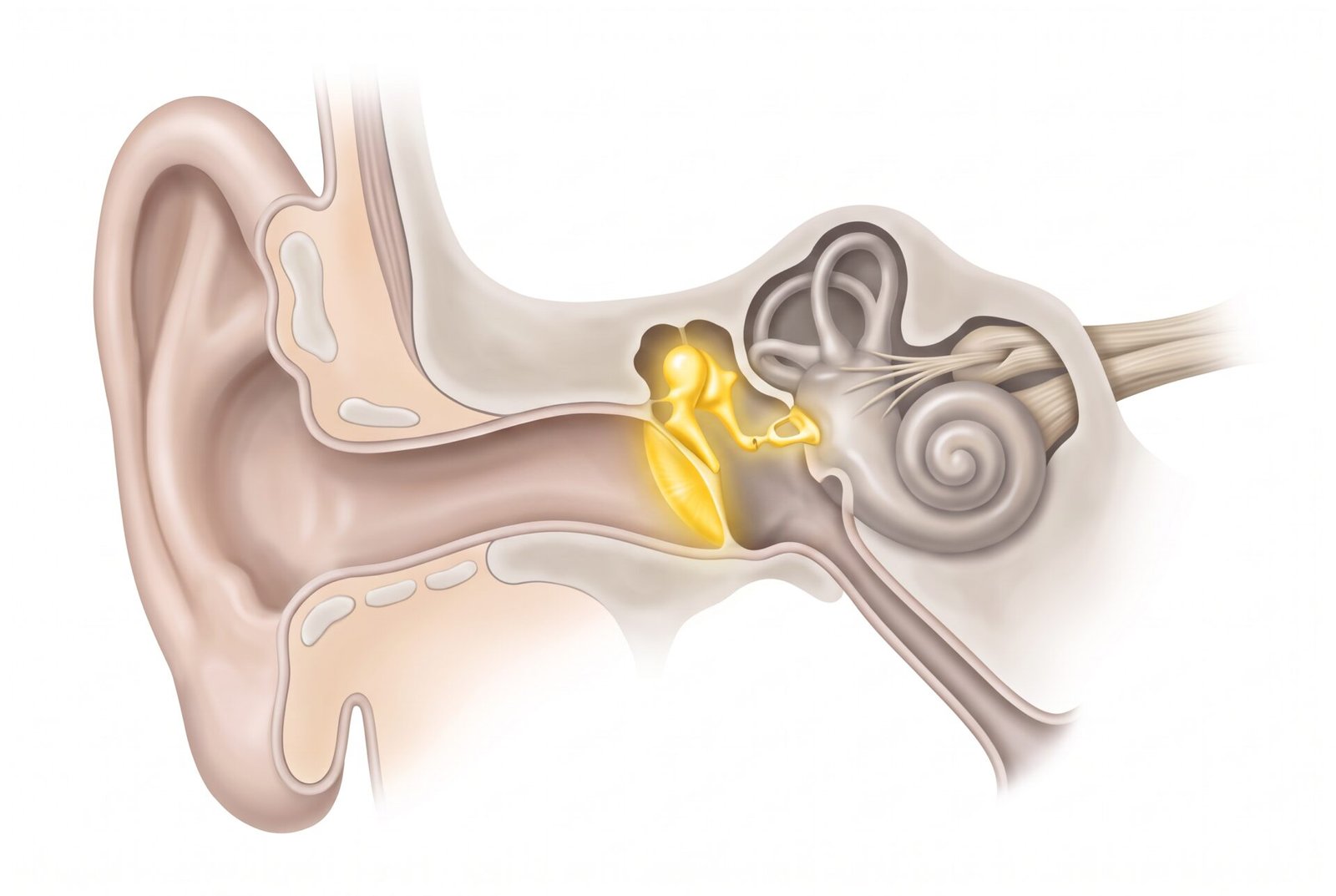
The vibrating eardrum moves the ossicles, three tiny bones in the air-filled middle ear. They pass the vibrations on to the inner ear.
When something goes wrong here
Fluid, an infection or damage to the eardrum or the tiny bones can stop the vibrations reaching the inner ear. This is also conductive hearing loss.
Middle ear highlighted
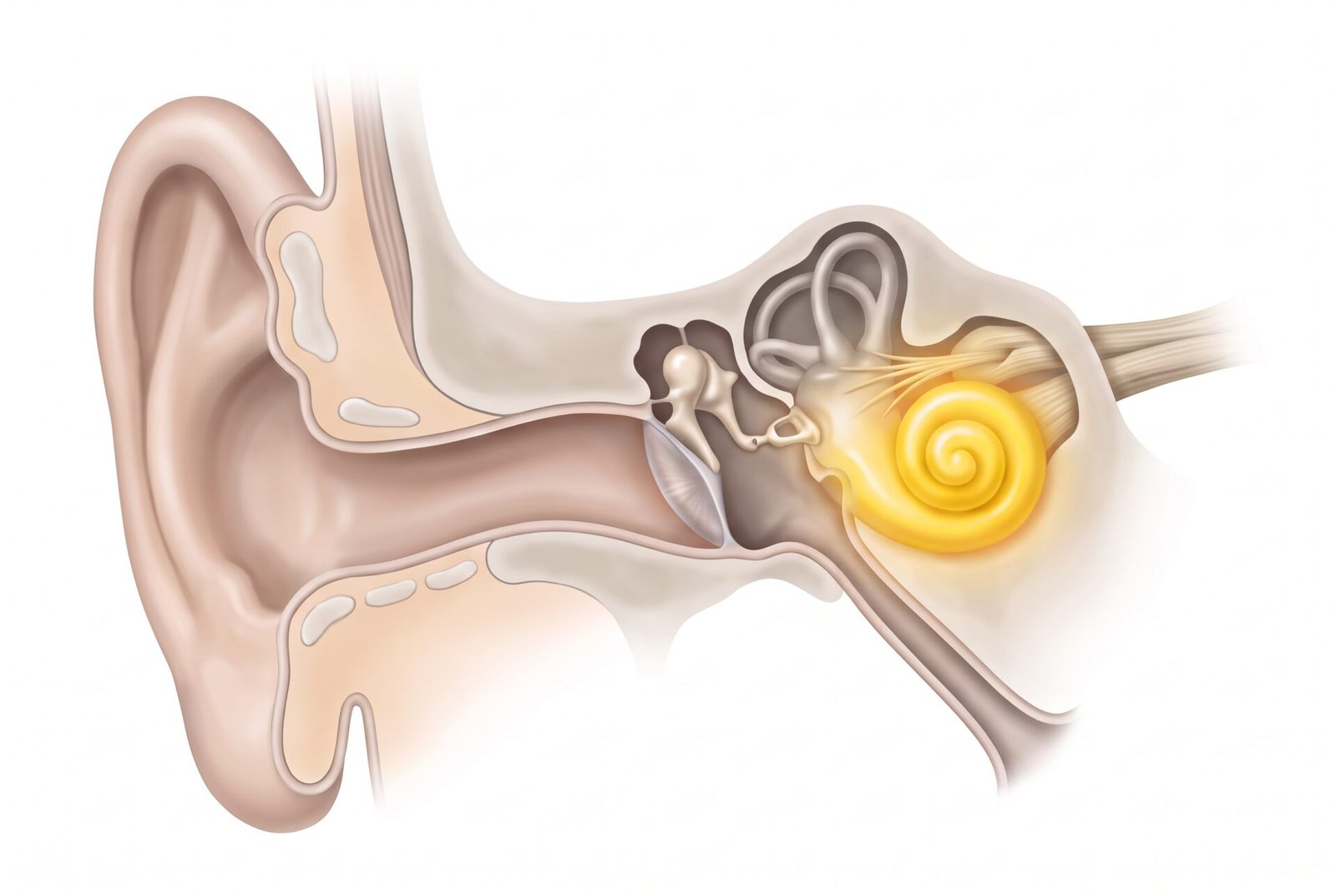
Inner ear highlighted

Step 3

The inner ear

In the cochlea, a snail-shaped organ filled with fluid, the vibrations push against tiny hair cells. The hair cells turn the vibrations into electrical nerve impulses.
When something goes wrong here
When hair cells are damaged or missing, for example through ageing, loud noise, genetics or illness, the result is sensorineural hearing loss.

Step 4

The hearing nerve

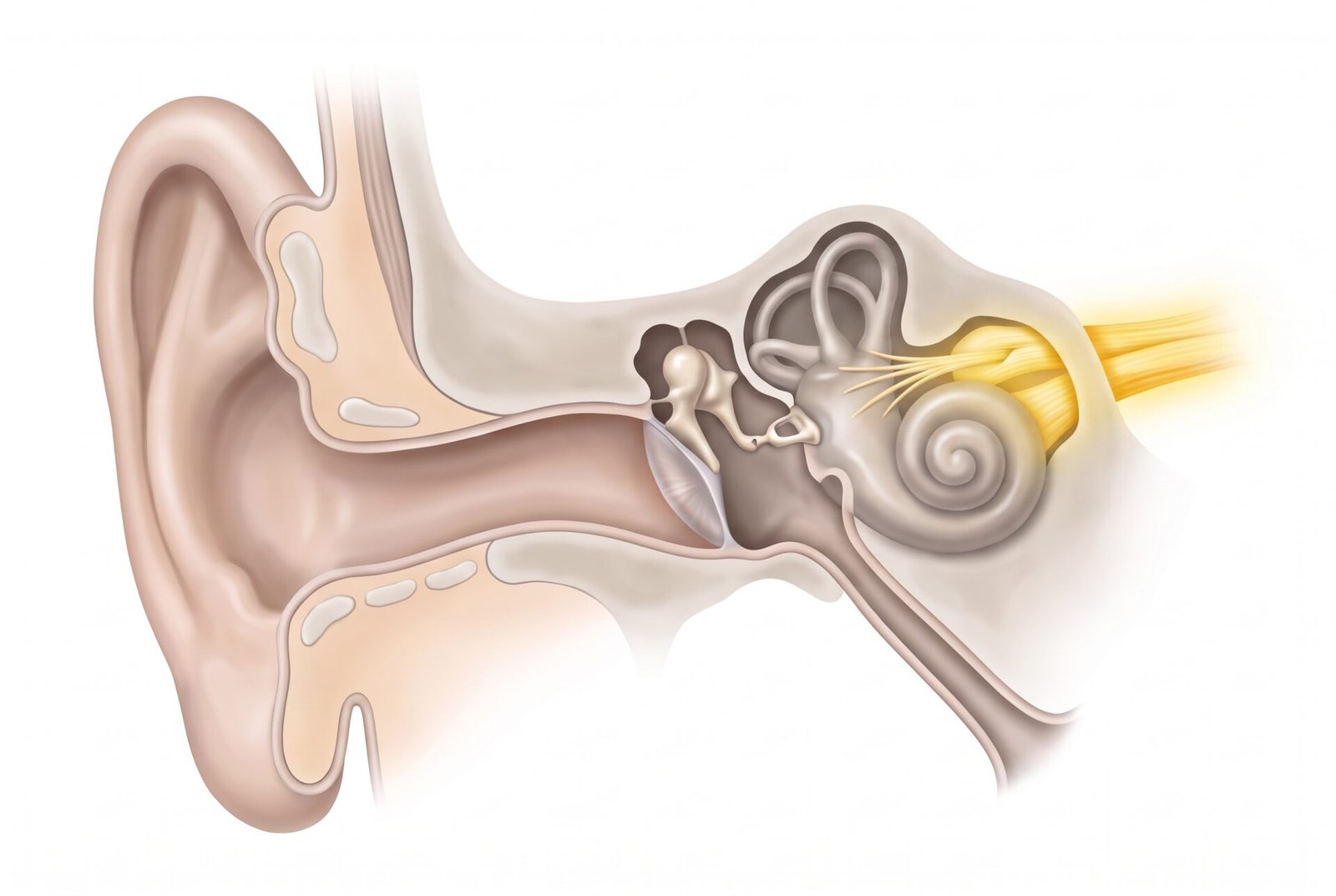
The auditory nerve connects the cochlea to the hearing centres of the brain. When the impulses reach the brain, they are recognised as sound: a voice, music or a car horn.
When something goes wrong here
If the nerve itself is damaged or missing, the signals cannot reach the brain. This is neural hearing loss.
Hearing nerve highlighted

It all happens in an instant

Your ears never switch off. Because every step happens so quickly, you hear sounds the moment they happen. If any part of this chain does not work as it should, hearing loss can result.

Two ears, one picture of sound

Hearing with both ears lets the brain work out where sounds come from and pick out speech from background noise. That is why hearing loss in one ear can make noisy places so tiring. Hearing loss in one ear

Where hearing loss starts

The part of the ear that is affected decides the type of hearing loss, and the type guides the treatment.
Part of the earWhat can go wrongType of hearing loss
Outer ear and ear canalWax, infection, a narrow or closed ear canalConductive
Middle earFluid, infection, damage to the eardrum or the tiny bonesConductive
Inner ear (cochlea)Damaged or missing hair cellsSensorineural
Inner ear and outer or middle earProblems in both places at onceMixed
Hearing nerveA damaged or missing nerveNeural

Want to know how well you hear?

A hearing test shows how your hearing is working and what may help.